

· AFX Research
Helium Rights and Where They Sit Inside the Mineral Estate
Helium comes up with the gas and almost no deed mentions it by name, so ownership turns on wording written when it was worthless. What the record settles and what it cannot.
Table of Contents
Helium leasing has reached tracts in the Four Corners, the Texas Panhandle, and the northern plains, and the letters landing on landowners look much like the oil and gas letters of forty years ago. The question underneath them is older than the letter. Somebody severed the minerals in 1948, the deed says oil and gas, and nobody involved had any reason to think about a trace component of the gas stream. Answering who can lease it means reading reservation clauses in old deeds with a substance in mind that the drafters never named.
Helium arrives with the gas
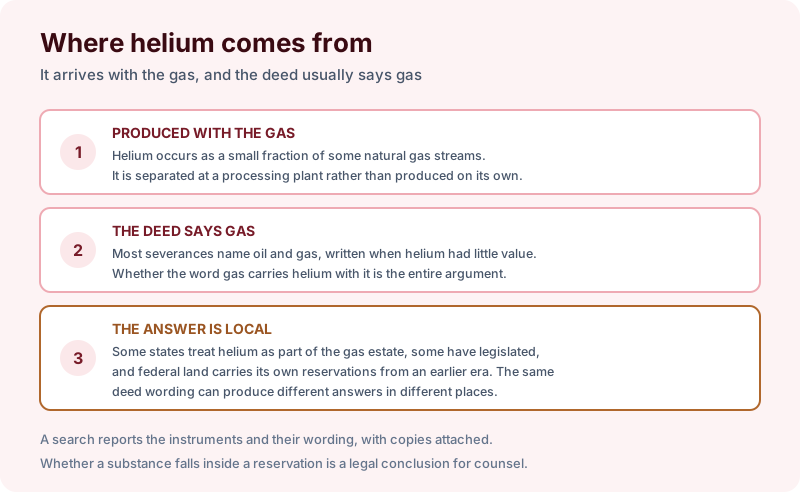
Helium is not produced on its own. It occurs as a small fraction of certain natural gas streams and is separated out at a processing plant, which is the physical fact that shapes the legal one. A helium project is a gas project with an extra step, and it is normally developed under a gas lease or something closely modeled on one.
That is why the argument is about a single word. Most severances name oil and gas, and whether the word gas carries helium along with it is the whole question.
The answer is not uniform. Some states treat helium as part of the gas estate, some have legislated on the point, and federal land carries reservations from an era when the government was stockpiling helium for its own purposes. The same deed wording can produce different outcomes in different places, so nothing here generalizes safely.
The three wordings you will actually find
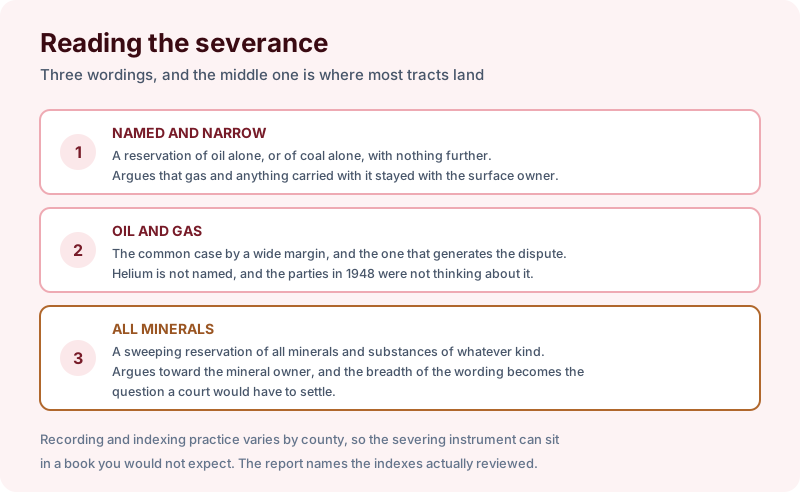
A narrow reservation naming oil alone, or coal alone, supports the argument that gas and anything carried with it stayed with the surface owner. That is the least common case and the easiest to reason about.
The oil and gas reservation is the common one by a wide margin, and it is precisely where the dispute lives. Helium is not named, the parties were not thinking about it, and a court asked to decide will be construing intent from a document drafted for a different purpose.
A sweeping reservation of all minerals and substances of whatever kind pushes toward the mineral owner, and then the breadth of that language becomes the thing being argued about. It is the same structural problem described in lithium and brine rights, with a different substance in the gap.
There is one wrinkle helium adds that lithium does not. Because it is separated downstream rather than produced separately, a tract can be under a perfectly ordinary gas lease whose royalty provisions were written with methane in mind. How the helium fraction gets valued and paid under that clause is a contract question sitting on top of the ownership question, and the two are worth keeping apart when reading an offer.
What a search contributes
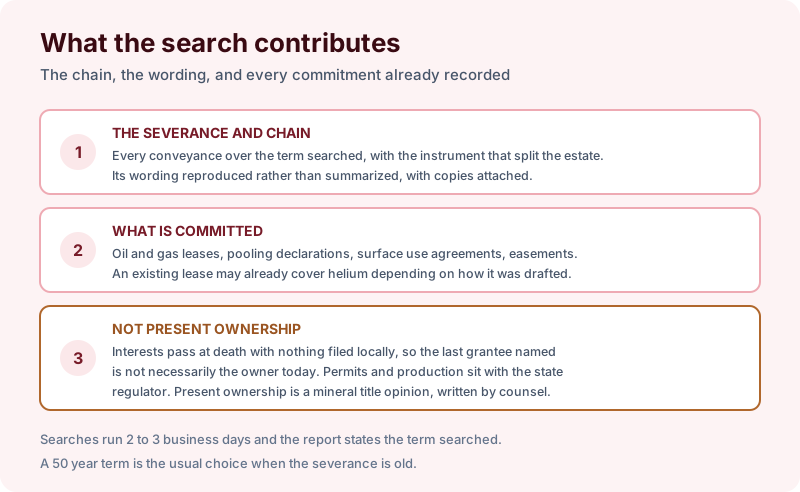
We give you every conveyance over the term searched, the instrument that severed the estate, and its wording reproduced rather than paraphrased, with copies attached so the argument is made from the document.
We also give you what is already committed. Oil and gas leases, pooling declarations, surface use agreements, and easements recorded against the tract, because an existing gas lease may already cover helium depending on how its granting clause was drafted. A landowner being offered a new helium lease on acreage already under an old gas lease has a problem worth identifying before signing anything.
What we do not give you is present ownership. Interests pass at death with nothing filed in the county where the land sits, so the last grantee named in the record is not necessarily today’s owner. Permits and production data sit with the state regulator rather than the recorder. Present ownership is a mineral title opinion written by counsel, working from the record we assemble, and recording practice varies by county so where an instrument was filed is a local fact. Our search packages set the term.
The takeaway
Helium ownership turns on whether a deed written before anyone valued it swept the substance in, and on which state’s rule applies where the land sits. Get the severing instrument, the full chain, and any existing lease in front of counsel before responding to an offer letter. Searches run 2 to 3 business days. Start the order online, or send us the legal description and the county and we will tell you which term fits and what a search of that scope would and would not cover before anything is ordered.