

· AFX Research
Gas Storage Rights and the Mineral Estate, What to Check
A depleted reservoir used to store gas is being sold as a container rather than a source. Whether an old severance carried that right varies by state and by wording.
Table of Contents
A landowner in Pennsylvania gets a letter offering an annual payment for gas storage rights under her property. Nobody is proposing to drill anything, nothing will be produced, and the formation in question stopped producing in 1961. She assumes this is a mineral matter, which it may be, and that the minerals were reserved in an old deed, which they were. Whether that reservation carried the right to store gas in the emptied formation is a genuinely open question in several states, and it turns on wording her grandfather never thought about. It sits beside pore space and carbon storage rights as the older half of the same problem.
What a storage right is
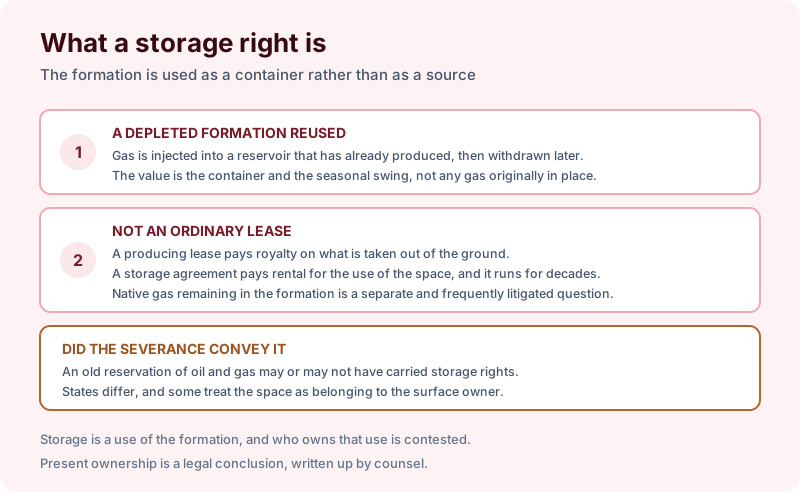
A storage field is a depleted reservoir reused as a container. Gas produced elsewhere is injected in the summer, held in the formation, and withdrawn in winter when demand peaks. The value of the asset is the space and the seasonal swing it makes possible, not any hydrocarbon that was originally there.
That makes it structurally different from a producing lease. A lease pays royalty on what is taken out of the ground. A storage agreement pays rental for the use of the space, usually on a long term with renewal rights, and the economics resemble a lease of real estate more than they resemble oil and gas production.
There is also a recurring fight over native gas, meaning whatever remained in the formation when production stopped. Once storage gas is injected it mixes with what was there, and who owns the resulting inventory has produced a substantial body of litigation.
Whether the severance carried it
The central question is whether a reservation of “oil, gas and other minerals” written in 1922 conveyed the right to use the emptied formation as a container decades later. States answer this differently and the answers are not converging.
Some treat the storage right as belonging to the mineral owner, reasoning that the formation is part of the mineral estate. Others treat the space itself as belonging to the surface owner once the minerals have been produced out of it, on the view that what was conveyed was the substance rather than the void. Some have resolved it by statute.
This is a question of construction, which means it belongs to counsel rather than to an abstractor, and it is the same division of labor described in a mineral title opinion versus a records search. What a search contributes is the exact reservation language, quoted in full rather than summarized, because that sentence is the case.
What storage leaves behind
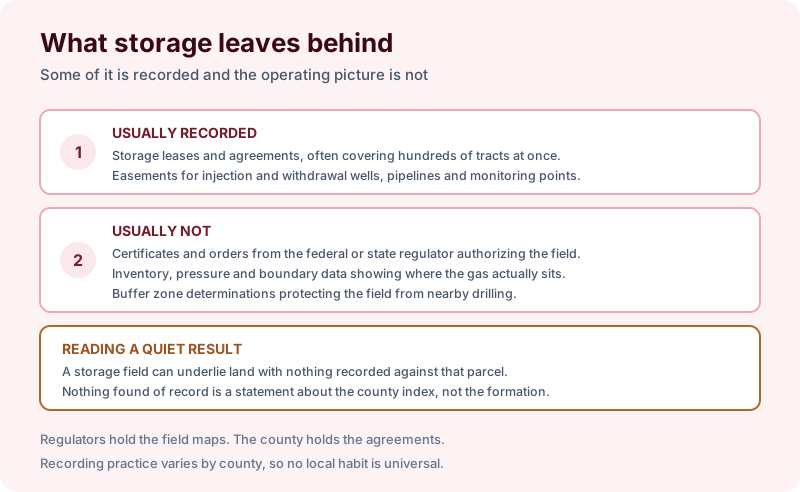
Storage leases and agreements are recorded, frequently covering hundreds of tracts in a single instrument, along with easements for injection and withdrawal wells, pipelines and monitoring points.
The operating picture is not recorded. Certificates and orders from the federal or state regulator authorizing the field, inventory and pressure data, the actual boundary of the stored gas, and buffer zone determinations restricting nearby drilling all sit with the agency.
That last one matters to neighbors. A storage field can effectively restrict drilling on adjoining land to protect the integrity of the reservoir, and a parcel may sit inside a protective buffer with nothing recorded against it at all. Nothing found of record is a statement about the county index rather than about the formation, and recording practice varies by county.
Scoping the search
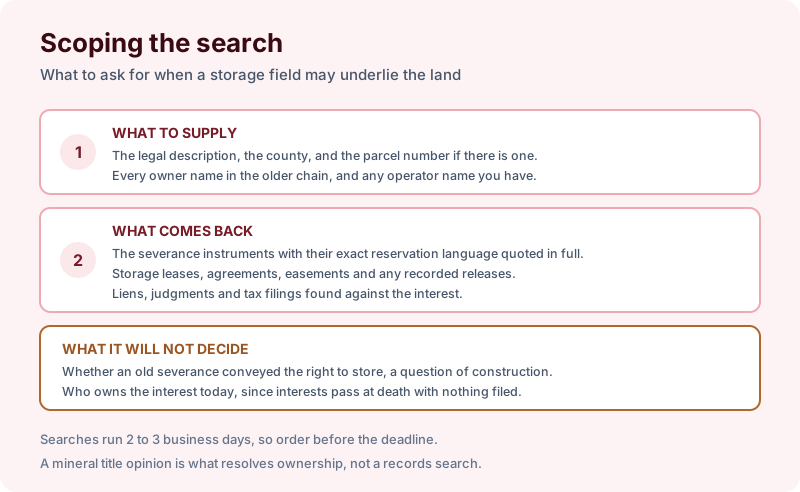
Give us the legal description, the county, the parcel number if there is one, every owner name in the older chain, and any operator name you have. What comes back is the severance instruments with their reservation language in full, the storage leases, agreements, easements and recorded releases, and the liens and judgments found against the interest. Our search packages set out the available terms.
What it will not decide is whether the old severance conveyed the storage right, or who owns the interest today, since interests pass at death with nothing filed. Present ownership is a legal conclusion set out in a mineral title opinion.
The takeaway
Storage is a use of the formation rather than an extraction from it, and whether that use belongs to the mineral owner or the surface owner depends on the state and on a sentence written a century ago. Get the exact wording in front of counsel before signing anything. Start the order online, or send us the address and the county and we will tell you which term fits and what a search of that scope would and would not cover before anything is ordered.