

· AFX Research
What a Depth Severance Does to Mineral Rights in the Record
A mineral estate can be split by depth as well as by fraction, leaving two owners stacked on one tract. How the line gets drawn, and why the index will never flag it.
Table of Contents
Most people picture a severed mineral estate as a fraction. Somebody owns a quarter of the minerals under the whole tract. There is a second way to divide it that is far less obvious and increasingly consequential, which is to split it horizontally, so one party owns everything above a stated depth and another owns everything below. Horizontal drilling made the lower half valuable decades after many of these splits were made, and the record does almost nothing to advertise them.
Two owners, stacked
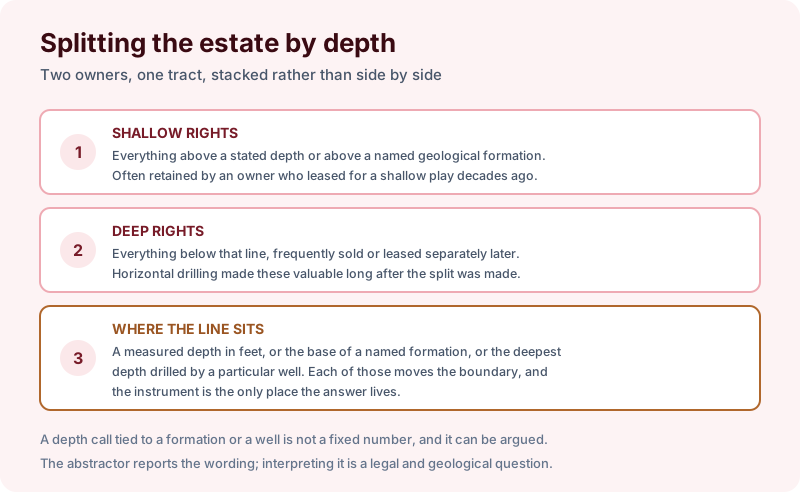
Shallow rights cover everything above a stated depth or above a named formation, and they are frequently what an owner kept after leasing for a shallow play years ago. Deep rights cover everything beneath that line, and they were often sold or leased separately much later.
The interesting part is where the line actually sits. It may be a measured depth in feet, the base of a named geological formation, or the deepest depth drilled by a particular well. Those are three different boundaries. A depth call tied to a formation moves with geological interpretation, and one tied to a well depends on records held somewhere other than the recorder. Only the instrument says which applies, which is why the wording has to be read rather than summarized.
How the split happened
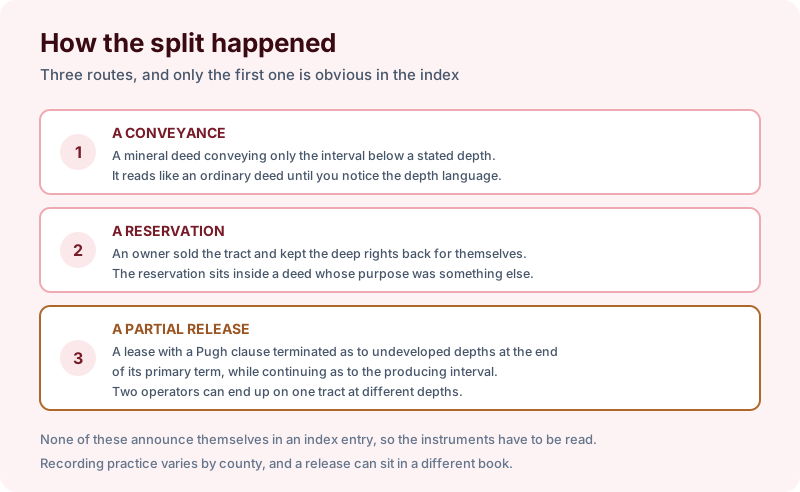
A conveyance. A mineral deed conveying only the interval below a stated depth. It reads like an ordinary mineral deed right up until the depth language, which may be one clause in the middle of the page.
A reservation. An owner sold the tract and kept the deep rights back. The reservation sits inside a deed whose evident purpose was the sale of something else entirely, which is exactly how it gets missed.
A partial release. A lease containing a Pugh clause terminates as to undeveloped depths at the end of its primary term while continuing as to the producing interval. That single mechanism can leave two operators on one tract at different depths with neither of them having bought anything from the other. Understanding it depends on the same reading described in when an oil and gas lease expires.
Worth noting that a vertical Pugh clause and a horizontal one do different jobs, and the terminology is used loosely. One releases acreage outside a producing unit, the other releases depths that were never developed. A tract can be affected by both at once, and reading which clause a particular lease contained is the only way to know what actually came free. Fractional ownership complicates it again, since a depth split can sit on top of the arithmetic in net mineral acres and fractional interests.
Searching a tract that has been split this way
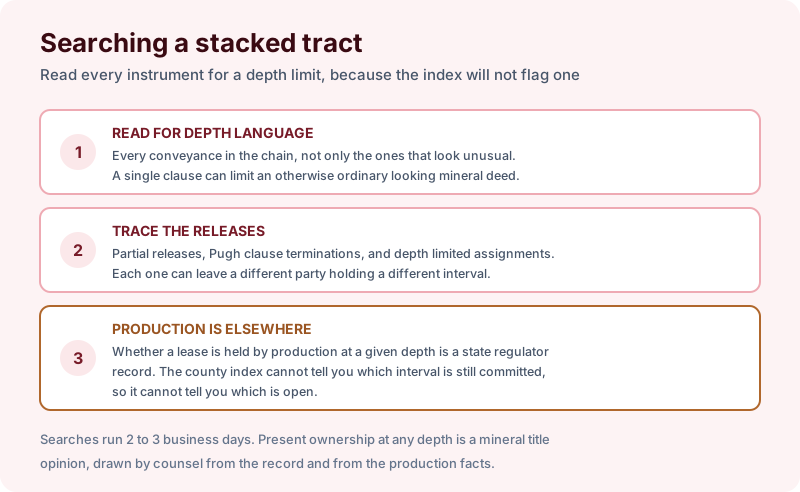
There is no shortcut here. A county index entry for a mineral deed looks identical whether the deed covers all depths or only the interval below eight thousand feet, so every conveyance in the chain has to be read for depth language rather than skimmed. That is a real cost and it is the only reliable method.
Then trace the releases. Partial releases, Pugh clause terminations, and depth limited assignments each leave a different party holding a different interval, and the picture only makes sense laid out in filing order. Recording practice varies by county, so a release can sit in a different book from the lease it partially ends.
The gap is production. Whether a lease is currently held by production at a given depth is a state regulator record, so the county index cannot tell you which interval is still committed and therefore cannot tell you which is open. Present ownership at any depth is a mineral title opinion, drawn by counsel from the record and the production facts together, and the last grantee named in a chain is not necessarily the owner today since interests pass at death with nothing filed locally.
The takeaway
A depth severance divides one tract between two owners who may never have met, and nothing in an index entry will warn you it exists. Read every conveyance for depth language, trace the partial releases, and check lease status with the state before assuming any interval is available. Searches run 2 to 3 business days. Start the order online, or send us the legal description and the county and we will tell you which term fits and what a search of that scope would and would not cover before anything is ordered.