

· AFX Research
Coalbed Methane, and Who Owns the Gas Inside the Coal Seam
Why a severed coal estate and a severed gas estate can both claim the methane, how the states split on the answer, and what the deed wording has to be read for.
Table of Contents
Across the eastern coalfields, coal was severed from the surface long before anybody could produce the gas trapped inside it. A deed from 1902 conveys all the coal in and under a tract, and it says nothing whatever about methane, because in 1902 methane was the thing that killed miners rather than a product anyone sold.
A century later that gas is worth producing, and two different owners can each point at a deed and claim it. This is one of the genuinely unsettled questions in mineral title, and it is unsettled differently in different states.
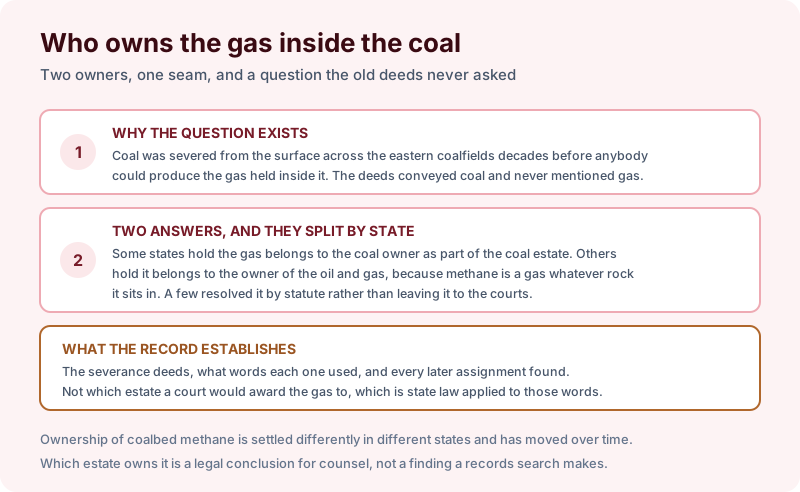
Two defensible answers
The gas belongs to the coal owner. Methane is generated by the coal, held within the coal, and cannot be produced without affecting the coal. On that view it is part of the coal estate, and whoever bought the coal bought it.
The gas belongs to the oil and gas owner. Methane is a gas. A grant of oil and gas conveys gas wherever it happens to be sitting, and the rock it is adsorbed onto does not change what it is.
Both readings have been adopted by courts of last resort in coal producing states, and a few legislatures have stepped in with a statute rather than leaving it to litigation. There is no national answer. There is the answer in the state where the tract sits, and that is a question for counsel. It is the same split that runs through coal and hard rock mineral rights generally.
Why the deed wording carries the weight
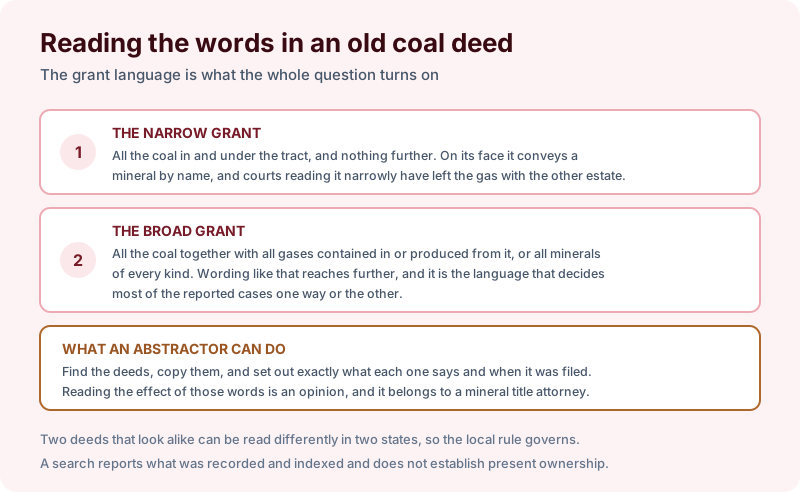
Even in states that have picked a rule, the rule usually gives way to what the instrument actually says. That puts enormous weight on language written by people who had no idea what they were deciding.
A narrow grant conveys the coal and stops. A broad grant conveys the coal together with all gases contained in or produced from it, or conveys all minerals of every kind and character. Those broader formulations are what decide most reported cases, and they turn up more often than you might expect in deeds from the 1890s onward, because the companies drafting them were being careful about things nobody could yet name.
The abstractor’s job here is precise and limited. Find the severance deeds, copy them in full, and set out exactly what each one says and when it was filed. What those words mean is an opinion, and a mineral title attorney writes it. A search establishes the record, not the outcome. The same division of labor governs reservation clauses in old deeds.
Scoping a search where this is in play
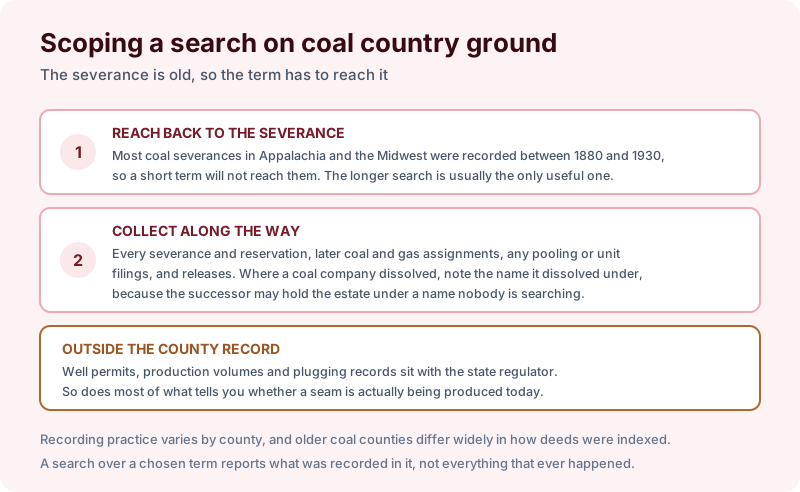
The severance is old, so the search has to be long enough to reach it. Most coal severances in Appalachia and the Midwest were recorded between roughly 1880 and 1930. A twenty year search will not come close, and even a thirty year search usually stops short. On coal country ground the 50-year search is frequently the only term that answers the question being asked.
Along the way, collect every severance and reservation, the later coal and gas assignments, any pooling or unitization filings, and any releases. One practical point worth planning for. Coal companies dissolved, merged and renamed themselves constantly across the twentieth century, so the estate may now sit with a successor holding it under a name nobody thought to search. Ask for the predecessor names deliberately rather than hoping the index surfaces them.
What sits outside the county record entirely is the operational picture. Well permits, production volumes and plugging records are held by the state oil and gas regulator, not by the recorder, so a search will not tell you whether a seam is being produced today.
The takeaway
Two owners, one seam, and a deed that never contemplated the question. Whether the coal estate or the gas estate carries the methane depends on the state and on the exact words somebody chose more than a century ago. Order a term long enough to reach the severance, get full copies rather than index abstracts, and put the wording in front of counsel. A search cannot establish who owns the minerals today, and on this question it cannot establish which estate owns them at all.
Start the order online, or send us the address and the county and we will tell you which term fits and what a search of that scope would and would not cover before anything is ordered.