

· AFX Research
Coal Mine Subsidence and Who Holds the Right to Surface Support
In coal country an old deed can waive the right to have your ground stay where it is. Where that language sits in the chain, and what a records search can and cannot settle.
Table of Contents
In the coal states there is a question that never comes up anywhere else. Not who owns the coal, which is the usual severance problem, but whether the owner of the surface still has the right to have that surface supported. Underground mining removes material, and ground above worked out seams can settle years or decades later. Whether anybody owes you anything when it does was frequently decided in a deed signed long before your house existed, which makes this a close cousin of the drafting problems in reservation clauses in old deeds.
Support is a right, and rights can be waived
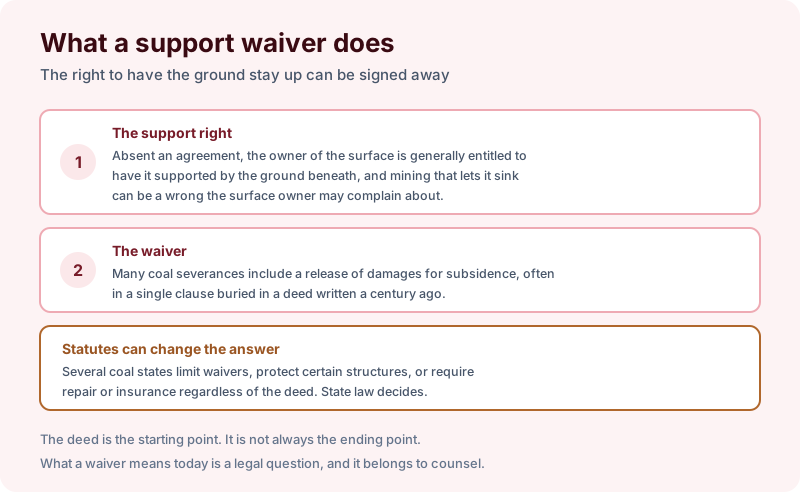
Start from the default. Absent an agreement saying otherwise, the owner of a surface estate is generally entitled to have it supported by what lies beneath, and mining that causes the ground to sink can be a wrong the surface owner is able to complain about.
Coal severances routinely changed that default. A great many of them include a release of damages for subsidence, sometimes described as a waiver of surface support, and it is usually one clause inside a long paragraph in a deed written a hundred years ago. The coal company wanted the right to mine out the seam without buying every house above it, and that is what the clause delivered.
State law has been rewriting the answer ever since. Several coal producing states now limit the effect of old waivers, protect dwellings or public buildings regardless of the deed, require repair or replacement, or run subsidence insurance programs funded by fees. What a given waiver means today is therefore a legal question that depends on where the tract sits and on when the instrument was signed, and it belongs to counsel rather than to an abstractor.
Where the language actually sits
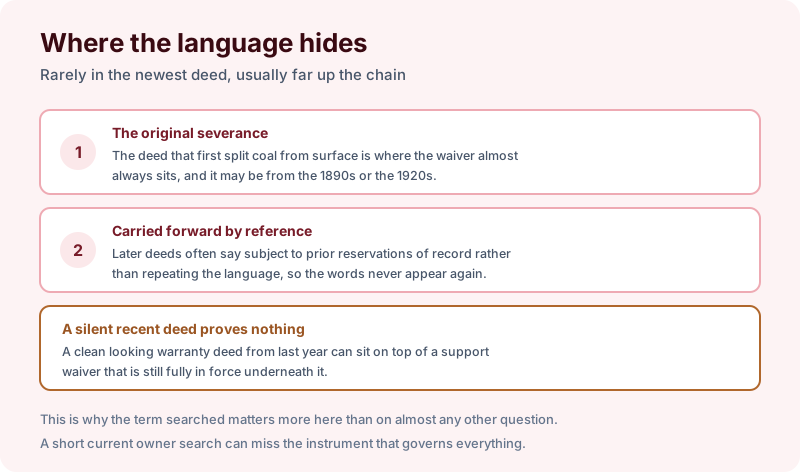
The waiver almost always sits in the original severance, the deed that first split coal from surface. In Appalachia and the Illinois Basin that document is often from the 1890s through the 1920s.
Later conveyances rarely repeat it. They say the property is subject to prior reservations and exceptions of record, which carries the burden forward without restating a word of it. The practical consequence is that a warranty deed recorded last year can look entirely clean while a support waiver remains fully in force underneath it.
That is why the term searched matters more on this question than on almost any other. A short current owner search can miss the instrument that governs everything, which is the same trap described in mineral title opinion versus records search. Our terms run 20, 30, and 50 years, and in coal country the longest one is frequently the only one that reaches the severance at all.
What the record holds, and what sits elsewhere
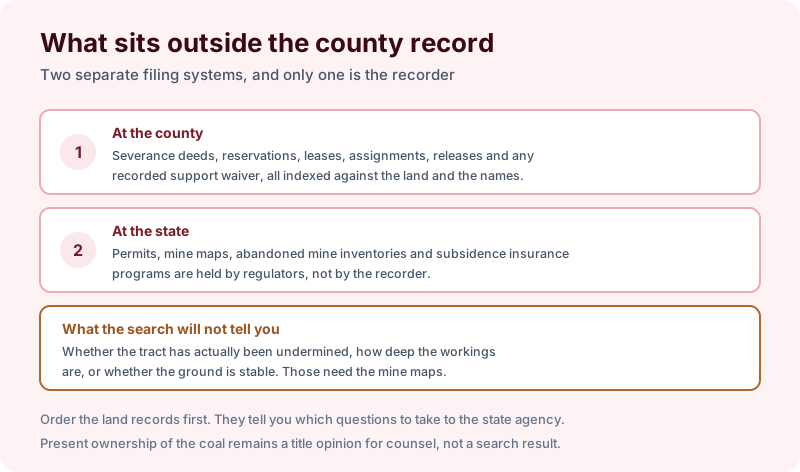
The county holds the land side. Severance deeds, reservations, leases, assignments, releases, and any recorded support waiver, indexed against the land and against the names, with copies attached to the report. Recording and indexing practice varies by county, so our report names the indexes reviewed rather than implying a single national filing place.
The state holds the mining side. Permits, mine maps, abandoned mine inventories, and subsidence insurance programs are kept by regulators, not by the recorder. A records search cannot tell you whether a particular tract has been undermined, how deep the workings run, or whether the ground is stable today. Those answers come from the mine maps, and the land records are what tell you which agency and which seam to ask about.
Present ownership of the coal is a separate limit worth repeating. Interests pass at death with nothing filed locally, so the last grantee named of record is not necessarily the owner now, and settling that is a mineral title opinion written by counsel. Our search packages are built to produce the instruments those opinions rest on, usually in 2–3 business days.
The takeaway
In coal country, ask who holds the right to support before you ask who holds the coal. Search far enough back to reach the original severance, read the waiver language as it was written, take the mine maps from the state agency, and let counsel tell you what the statute does to a hundred year old clause. Start the order online, or send us the address and the county and we will tell you which term fits and what a search of that scope would and would not cover before anything is ordered.