

· AFX Research
Life Estates and Remainder Interests in a Mineral Estate
A life tenant holds the interest now and a remainderman holds it later, and production consumes the asset. Who signs a lease, who gets paid, and what the record shows.
Table of Contents
A landowner deeds the farm to their children and reserves a life estate in the minerals, or a will leaves the minerals to a spouse for life with the remainder to the children. Both are ordinary estate planning and both create a situation the mineral world handles awkwardly, because an interest divided by time meets an asset that gets used up. Working out who can sign a lease and who gets the check is a question the deed starts and state law finishes. It sits alongside inherited mineral rights, where the interest is divided by fraction rather than by time.
Two owners of one interest
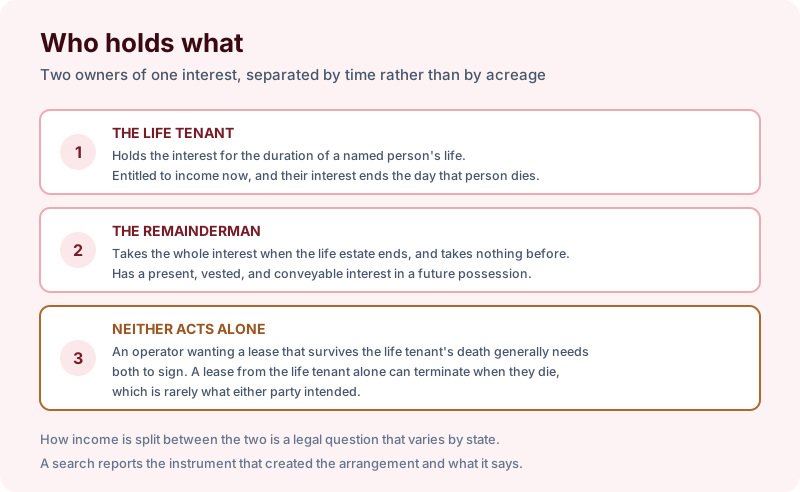
The life tenant holds the interest for the duration of a named person’s life, is entitled to income now, and their interest ends the day that person dies. The remainderman takes the whole interest at that point and takes nothing before it, holding a present and conveyable interest in a future possession.
Neither can act alone on the decision that matters most. An operator wanting a lease that survives the life tenant’s death generally needs both to sign, because a lease granted by the life tenant alone can terminate when they do. That is rarely what either side intended, and it is the reason a careful landman insists on both signatures.
Production consumes the asset
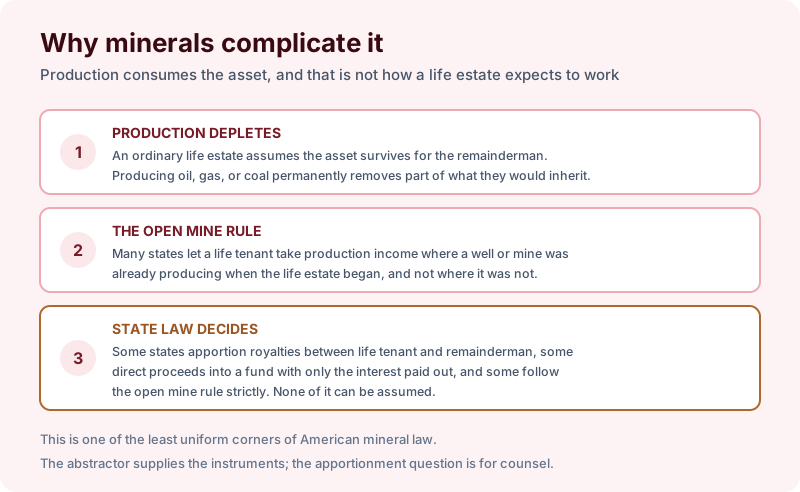
An ordinary life estate assumes the asset survives for the remainderman. A life tenant may take the rents from a farm, and the farm is still there afterwards. Producing oil, gas, or coal permanently removes part of what the remainderman would have inherited, so treating royalty as ordinary income quietly transfers value from one to the other.
The law has an old answer to this, the open mine doctrine, which in many states lets a life tenant take production income where a well or mine was already producing when the life estate began, and not where it was not.
Beyond that the approaches diverge considerably. Some states apportion royalties between the two, some direct proceeds into a fund with only the interest paid to the life tenant, and some apply the open mine rule strictly. This is one of the least uniform corners of American mineral law, and nothing here can be assumed from another state’s practice.
The practical effect is that two families with materially identical deeds, on either side of a state line, can end up dividing the same royalty stream in completely different proportions. That is worth saying plainly to anyone who has been told how it worked for a relative elsewhere.
Finding it in the record
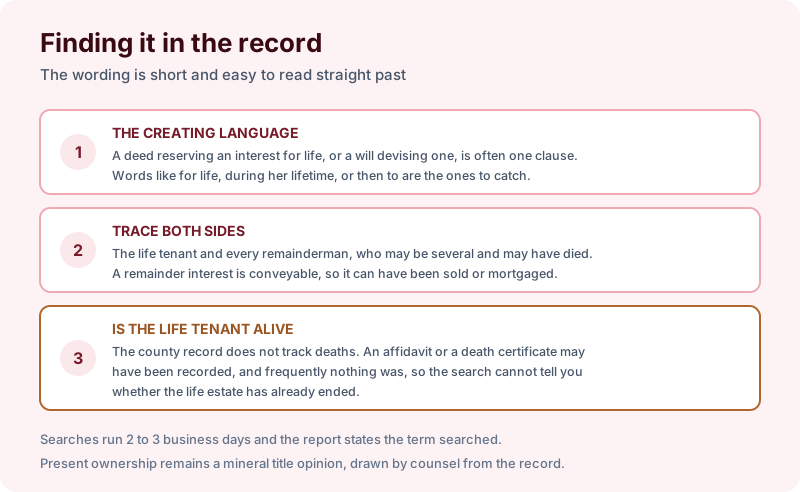
The creating language is short. A deed reserving an interest for life, or a will devising one, is frequently a single clause, and phrases like for life, during her lifetime, or then to are what to catch. It is easy to read straight past in a long instrument.
Then trace both sides. The life tenant and every remainderman, who may be several and may themselves have died. A remainder interest is conveyable, so it can have been sold or mortgaged, and the person who takes on the life tenant’s death may not be anyone named in the original deed.
What the county cannot tell you is whether the life tenant is still alive. Deaths are not tracked in the land record. Sometimes an affidavit or death certificate was recorded and frequently nothing was, so the search cannot establish whether the life estate has already ended. Present ownership stays a mineral title opinion written by counsel, and interests pass at death with nothing filed locally. Recording practice varies by county. Searches run 2 to 3 business days, and our search packages set the term.
The takeaway
A life estate splits one mineral interest between somebody who benefits now and somebody who benefits later, and production takes from the second to pay the first. Get both signatures on any lease meant to last, read the creating instrument rather than the summary, and take the apportionment question to counsel in that state. Start the order online, or send us the legal description and the county and we will tell you which term fits and what a search of that scope would and would not cover before anything is ordered.